
A concrete restoration engineer is the licensed professional who tells you what is wrong with the concrete, why it failed, and exactly how to fix it — in a sealed engineering document a contractor can build from and a building official can permit. We are that engineer. We do not perform the physical repair work. Our job is the inspection, the diagnosis, and the PE-stamped restoration plan that protects the property owner, the association, and any contractor who eventually touches the building.
For more than two decades, owners and condo boards across Miami, Miami Beach, Hollywood, Coconut Grove, Coral Gables, Fort Lauderdale, Broward County, and West Palm Beach County have relied on independent structural engineers to bridge the gap between a milestone inspection finding (“there is concrete distress”) and a permittable repair scope (“here is the drawing, the spec, and the schedule of values to fix it”).
Quick answer: A concrete restoration engineer in Florida produces three deliverables — a structural condition assessment, a set of PE-stamped repair drawings and specifications, and a written scope of work. Together they let a property owner solicit competitive bids, pull a permit, and verify the contractor actually performed the repair to code.
Table of Contents
When you need a concrete restoration engineer
Most boards and owners don’t go looking for a concrete restoration engineer — they get pushed toward one. Below are the seven most common triggers we see in South Florida.
1. Your milestone inspection identified “substantial structural deterioration”
Florida Statute §553.899 requires a Phase 2 milestone inspection whenever a Phase 1 inspector documents substantial structural deterioration. A Phase 2 inspection — and the repair plans that follow — must be sealed by a Florida-licensed structural engineer. If you’ve just received a Phase 1 report flagging spalling, delamination, or corroded reinforcement, this is the next step. (See our milestone inspections service page for how the two phases connect.)
2. Your SIRS reserve study flagged concrete repairs as a near-term funding item
A Structural Integrity Reserve Study (SIRS) lists the building’s structural components, their remaining useful life, and the funding required to repair or replace them. When concrete restoration shows up as a 0–5 year funding item, the board needs an engineering scope and cost estimate that contractors can bid against — not a placeholder number.
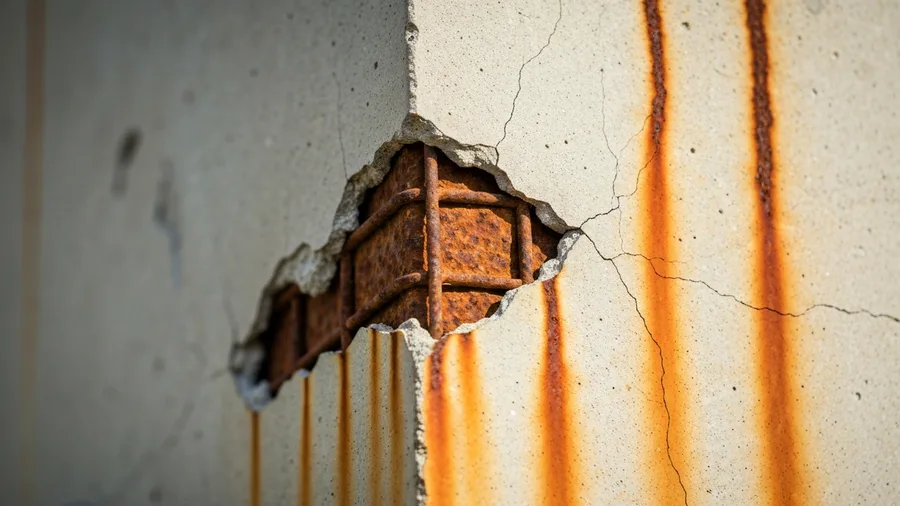
3. You see active spalling, cracking, rust staining, or balcony delamination
Visible distress — concrete falling off a column, rust stains running down a balcony slab, hollow-sounding spots when a slab is sounded — is a structural condition under ACI 562 Code Requirements for Assessment, Repair, and Rehabilitation of Existing Concrete Structures. It is not a cosmetic issue. It needs a documented assessment before it gets worse.
4. Your insurance carrier or lender is asking for a structural condition report
Carriers across Florida have tightened underwriting since 2022. Many will not renew a coastal condo policy without a current structural condition report. Lenders refinancing a building loan often require the same. Both want a stamped engineering document — not a contractor letter.
5. The local building department won’t accept a contractor’s repair scope
Building departments in Miami-Dade and Broward routinely reject “T&M” repair permits with no engineering drawings behind them. They want plans, sections, repair details, and material specifications sealed by a Florida PE. Without that package, the permit doesn’t move.
6. You’re soliciting bids and getting wildly different numbers
When three contractors give you bids that range from $80K to $480K for “the same” balcony repair, the problem is usually the scope. A PE-stamped restoration plan with quantified repair areas (square feet of slab repair, linear feet of crack injection, count of rebar substitution locations) eliminates 90% of the bid spread.
7. You need a Threshold Inspector for new structural concrete work
Florida requires a Special Inspector (“threshold inspector”) on certain structural concrete projects. Paul holds Florida Special Structural Threshold Inspector certification #7026221, separate from his PE license — one of the credential combinations you need for both the design and construction-phase oversight on the same project.
Why a PE-stamped plan matters under the Florida Building Code
The 8th Edition (2023) of the Florida Building Code and its referenced standards make the engineering deliverable non-negotiable for substantive structural repair work:
- FBC, Existing Building, Chapter 4 (“Repairs”) requires that structural repairs use materials and methods that “result in compliance with the engineering provisions” of the code — which in practice means PE-stamped drawings and specs.
- ACI 562-21 is incorporated by reference and dictates how the engineer evaluates the structure, classifies the deterioration, and selects repair methods.
- ICRI Guideline No. 320.2R governs how repair areas are defined, surface preparation specified, and acceptance criteria written.
A “concrete restoration engineer” is the Florida-licensed PE who reads those documents for a living, applies them to your specific building, and then puts a seal on a drawing that legally permits the work. Without that seal, every party in the chain — owner, contractor, building department, insurer — is exposed.
Our 4-step concrete restoration engineering process
Step 1 — Scope & site walk (week 1)
We meet on-site, walk the building with the property manager or board representative, review existing drawings and prior inspection reports, and define the assessment boundary. You receive a written scoping memo before any inspection cost is incurred. This is where we identify access constraints (lifts, swing stages, scaffold), unit-occupancy issues, and historical repair records that change the inspection plan.
Step 2 — Condition assessment & distress mapping (weeks 2–4)
This is the field work. We perform a visual and tactile inspection of all accessible structural concrete elements — slabs, beams, columns, balconies, parking decks, planters. Every distressed area is photographed, measured, geotagged on a building elevation, and classified by ACI 562 distress category (cracking, spalling, delamination, corrosion, scaling). For elements where visual inspection isn’t enough, we specify and supervise non-destructive testing — chain drag, hammer sounding, half-cell potential, cover meter, or chloride profiling.
Step 3 — Cause analysis & repair design (weeks 4–6)
We don’t just photograph distress; we explain it. Carbonation? Chloride-induced corrosion? Differential settlement? Original construction defect? Each repair method we specify ties back to a documented cause. This is the section that survives litigation and insurance scrutiny. We then produce repair drawings — typical details, location plans, sections — and material specifications referencing ICRI 320.2R, ACI 318, and the Florida Building Code.
Step 4 — Bid package & construction-phase support (week 6+)
You receive a sealed bid package: drawings, specifications, schedule of values, and bid form. We answer contractor RFIs during bidding. Once a contractor is selected, we provide construction-phase services — submittal review, periodic site observation, pay-app review, and a final close-out letter — at hourly rates so you only pay for what you use.
What’s included in our PE-stamped restoration report
Every deliverable we hand to a client contains, at minimum:
- Executive summary — one-page overview a board can hand to owners and a building official can read in five minutes
- Structural condition assessment narrative — by element type (slab, column, balcony, etc.), keyed to building elevations and floor plans
- Quantified distress inventory — square feet of partial-depth repair, square feet of full-depth repair, linear feet of crack injection, count of rebar substitution and supplementary anchorage details
- Cause analysis — corrosion mechanism, environmental exposure category, original construction quality observations
- Repair drawings, sealed — typical repair details, location plans, sections
- Material specifications — repair mortars, bonding agents, corrosion inhibitors, surface treatments, all referencing ASTM, ACI, and ICRI standards
- Schedule of values & bid form — line-item pricing structure that lets you compare contractor bids apples-to-apples
- Recommendations for monitoring & maintenance — what to inspect, how often, and at what cost in the SIRS funding plan
Every report is sealed by Paul Pineda, PE 61808 personally — backed by Special Structural Threshold Inspector certification #7026221 and FHA Consultant designation #A0939. Meet your engineer.
South Florida service area
We perform concrete restoration engineering services across the most dense and demanding building stock in the country — coastal high-rises, mid-century low-rise condos, parking structures, and mixed-use podium buildings. Our active service area:
- Miami-Dade County: Miami, Miami Beach, Coconut Grove, Coral Gables
- Broward County: Fort Lauderdale, Hollywood, and Broward County at large
- Palm Beach County: West Palm Beach County
Every coastal community on this list shares the same exposure profile: marine chloride environment, year-round humidity, stuccoed concrete frames, and a 1970s–1990s construction-era stock that is exactly the population now triggering milestone and SIRS deliverables.
About your engineer
Paul Edwards Pineda, PE is a Florida Licensed Structural Professional Engineer (PE 61808), Florida Special Structural Threshold Inspector (#7026221), and FHA Consultant (#A0939). He is also licensed in Texas (PE #116762) and Tennessee (PE #124078). His daily work is structural condition assessment, milestone and SIRS reporting, shoring design for elevated slabs, and concrete restoration plans. Every report we issue is sealed by Paul personally — the engineer who walked the building is the engineer whose name is on the drawing. Read his full profile.
Frequently asked questions
Do you also perform the concrete repair work?
No. We are an engineering firm, not a restoration contractor. We inspect the building, diagnose the distress, and produce sealed repair plans. You hire a separate contractor to perform the work. We can recommend qualified contractors and review their bids, but we do not have a financial relationship with any of them — that independence is the point.
How is a concrete restoration engineer different from a general structural engineer?
Every concrete restoration engineer is a structural engineer, but the reverse is not true. Concrete restoration is a sub-discipline that requires fluency with ACI 562, ICRI 320.2R, ASTM repair-material standards, and the specific failure mechanisms of reinforced concrete in marine environments.
How long does a concrete restoration project take?
The engineering deliverable typically takes 4–8 weeks from site walk to sealed bid package, depending on building size and access. The construction phase varies widely — a single balcony repair may take three weeks; a full façade restoration on a 20-story building can run 18 months.
Will my building need shoring during the repair?
Often yes — particularly for full-depth slab or balcony repairs. We provide shoring design for elevated slabs as a separate service, sealed under the same PE.
How much does a concrete restoration plan cost?
The engineering fee is typically 5–10% of the eventual repair construction budget for the design phase, plus hourly construction-phase services. A stamped plan that cuts your contractor bid spread in half pays for itself many times over.
Can you work with our existing milestone or SIRS engineer?
Yes. We frequently take findings from another engineer’s milestone or SIRS report and translate them into a permittable restoration scope. We do not need to re-do the prior work; we extend it.
Get a 20-minute scoping call with your engineer
If you have a milestone finding, a SIRS reserve item, an insurance demand letter, or visible spalling that the board needs answered, the next step is a 20-minute scoping call. Call (305) 890-6333 or request a free proposal. We will tell you on that call whether your situation needs a full assessment, a scoped opinion letter, or a referral elsewhere — at no charge.
Request a concrete restoration scope
Our team responds within 24 hours.
We are available 24/7
(305) 890-6333
También hablamos español
Related Engineering Services
- → Florida Milestone Inspections - SB-4D 40-year recertification for condos & HOAs
- → Structural Engineering Services - Design, analysis & certifications by a licensed PE
- → Threshold Special Inspections - FBC 553.79 compliance inspections
- → Elevation Certificates & LOMA Letters - FEMA elevation certificates & flood zone corrections