
Mandatory Structural Integrity Reserve Studies (SIRS)
Ensure Your Community is Compliant and Financially Prepared with a State-Mandated Structural Integrity Reserve Study.
As part of Florida’s new building safety regulations, condominium and co-op associations are now required to conduct a Structural Integrity Reserve Study (SIRS). This is not a safety inspection, but a crucial financial planning tool. A licensed engineer or architect must perform a detailed visual analysis of the building’s core components to estimate their remaining useful life and replacement costs. This study provides a vital roadmap for your association, ensuring that adequate reserve funds are budgeted and collected to cover future capital repairs and replacements, protecting property values and preventing financial crises.
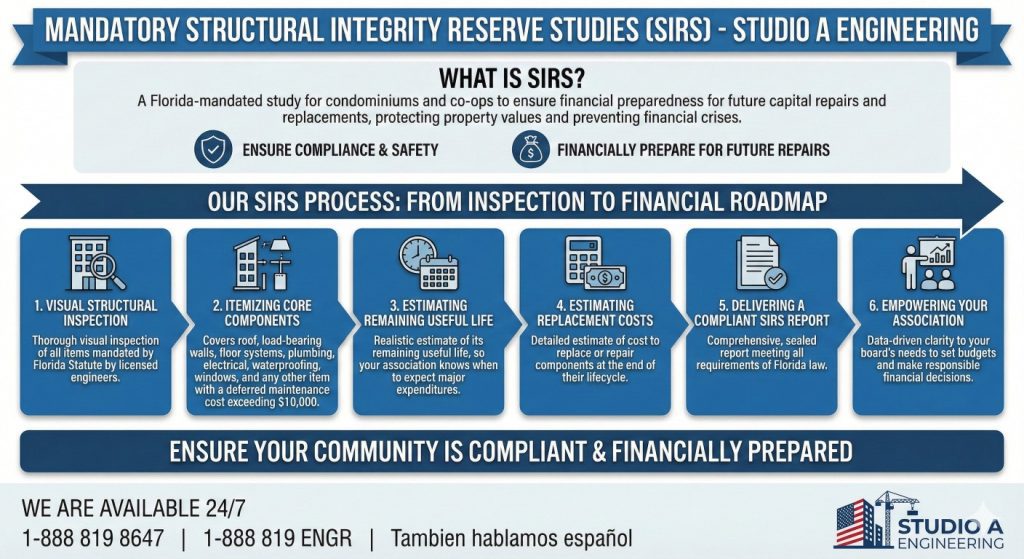
Our SIRS Process: From Inspection to Financial Roadmap
1. Visual Structural Inspection
Our licensed engineers conduct a thorough visual inspection of all items mandated by Florida Statute, assessing their current condition and identifying any visible signs of wear or degradation.
2. Itemizing the Core Components
The study specifically covers the roof, load-bearing walls, floor systems, plumbing, electrical systems, waterproofing, windows, and any other item with a deferred maintenance cost exceeding $10,000.
3. Estimating Remaining Useful Life
For each component, we use our extensive engineering experience to provide a realistic estimate of its remaining useful life, so your association knows when to expect major expenditures.
4. Estimating Replacement Costs
We provide a detailed estimate of the cost to replace or repair each component at the end of its lifecycle. This forms the financial basis of your association’s mandatory reserve funding.
5. Delivering a Compliant SIRS Report
You receive a comprehensive, sealed report that meets all requirements of Florida law. This official document is a mandatory part of your association’s structural and financial records.
6. Empowering Your Association
A professional SIRS provides the data-driven clarity your board needs to set budgets, communicate with owners, and make responsible financial decisions that protect the entire community.
SIRS vs. Traditional Reserve Studies: What Changed?
Many associations ask, “We already have a reserve study; why do we need a new one?” The answer lies in the specific mandates of the new law. A traditional reserve study could be performed by various professionals and often allowed associations to vote to waive or partially fund their reserves.
Mandatory Funding Requirements
The Structural Integrity Reserve Study changes the rules. Effective December 31, 2024, associations can no longer vote to waive funding for the specific structural items identified in the SIRS (like roofs, load-bearing walls, and fireproofing). This mandatory funding ensures that buildings have the cash on hand for critical repairs, preventing the deferred maintenance that leads to tragedy.
Engineer-Led Analysis
Unlike older studies that might rely on generic tables, a SIRS requires a visual inspection by a licensed engineer or architect. This means your reserve schedule is based on the actual physical condition of your specific building, providing a much more accurate and safe financial plan.
The Mandatory Components We Analyze
Florida Statute is very specific about what must be included in a Structural Integrity Reserve Study. Our engineers perform a comprehensive evaluation of every required system to ensure your association is fully protected. This includes a detailed assessment of the:
- Roof: Including waterproofing, shingles, tiles, and drainage systems.
- Load-Bearing Walls: Checking for masonry cracks, spalling, or settlement.
- Floors & Foundations: Analyzing slabs, beams, and columns for structural soundness.
- Fireproofing & Fire Protection: Ensuring life-safety systems meet current codes.
- Plumbing & Electrical: Evaluating the age and condition of shared utility infrastructure.
- Windows & Exterior Waterproofing: Checking seals, stucco, and painting to prevent water intrusion.
By itemizing these specific components, we provide a granular level of detail that allows for precise budgeting, ensuring no financial surprises down the road.
