
Threshold Inspections in Florida: A Checklist for Multi-Story Buildings
Because of the state’s unique environmental challenges and strict building codes, these specialized assessments are non-negotiable for large-scale projects. Unlike standard municipal building checks, threshold inspections in Florida require the continuous oversight of a private, licensed Special Inspector.
- Licensed professional engineer in Florida
- Signed and sealed reports
What Triggers the Need for Threshold Inspections?
Not every building requires threshold inspections in Florida. The State of Florida has a very specific legal definition for what constitutes a “Threshold Building.” According to Florida law, your project will require mandatory threshold inspections if it meets any of the following criteria:
- Height: The building is greater than three (3) stories or exceeds 50 feet in height.
- Occupancy: The building has an assembly occupancy classification that exceeds 500 persons (such as large theaters, churches, or convention centers).
- Square Footage: The building has an assembly occupancy area exceeding 5,000 square feet.
If your architectural plans hit any of these triggers, you must hire a certified Special Inspector before the local building department will issue your primary construction permits.
Threshold Inspections Florida: The Special Inspector’s Role
During threshold inspections, the Special Inspector acts as the eyes and ears of the local building official, but they are hired directly by the owner or developer. Their sole responsibility is to verify that the load-bearing structural elements of the building are constructed in strict accordance with the permitted, signed, and sealed engineering plans.
This requires continuous, on-site observation during construction phases. The inspector must be a licensed Professional Engineer (P.E.) or Architect who holds a special certification from the state.
Threshold Inspections Florida: Checklist
To keep your project moving without costly Stop-Work Orders, your construction team must be prepared for the inspector’s arrival. Here is what we look for during comprehensive threshold inspections:
Foundation and Earthwork Verification
Before the building goes up, the ground must be ready. We inspect the installation of deep foundations, such as auger-cast piles or driven piles. We verify that the soil compaction and pile depths match the geotechnical engineer’s soil report and the structural plans.
01
Reinforcing Steel (Rebar) Placement
Concrete is only as strong as the steel inside it. Before any concrete is poured, we meticulously inspect the reinforcing steel. We check the grade of the steel, the bar size, spacing, lap splices, and clearances to ensure they perfectly match the structural drawings. Missing or improperly tied rebar is a leading cause of failed threshold inspections.
02
Concrete Placement and Curing
During the actual pour, the Special Inspector monitors the concrete placement. We verify the mix design tickets from the concrete trucks to ensure the PSI (pounds per square inch) matches the structural requirements. We also monitor the consolidation (vibration) of the concrete to prevent voids and honeycombing.
03
Shoring and Reshoring Systems
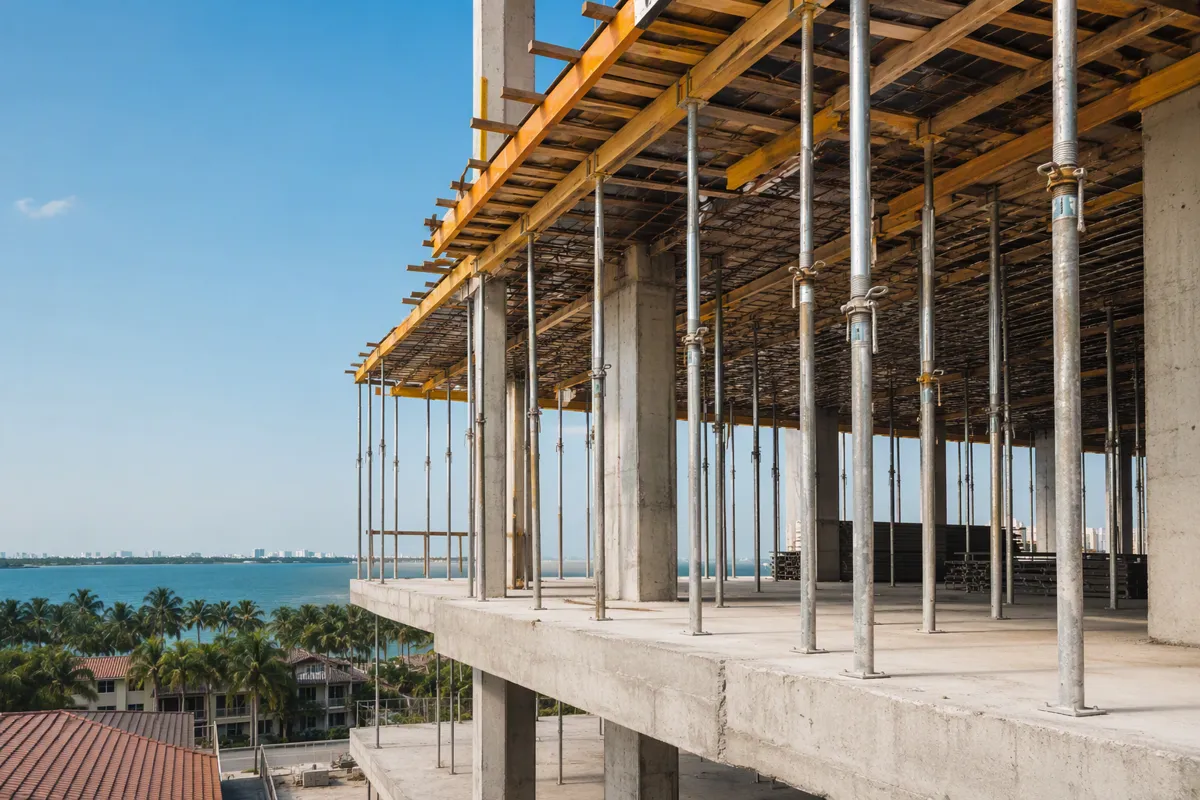
For multi-story concrete buildings, the temporary supports (shoring) are life-safety elements. We inspect the shoring layout before the pour, and strictly monitor the reshoring schedule as the concrete cures. Removing supports too early can cause catastrophic slab deflection or collapse. You can learn more about this specific expertise on our Shoring Design Specialist page.
04
Structural Steel Connections
If the building utilizes a structural steel frame, threshold inspections focus heavily on the connections. We verify high-strength bolting (checking torque and tension) and perform visual or non-destructive testing on structural welds to ensure the frame will withstand Florida’s hurricane-force wind loads.
05
Documentation and Legal Compliance
The physical inspection is only half the job. The administrative side of threshold inspections in Florida is equally rigorous. The Special Inspector must maintain a detailed daily log of all inspections performed and submit written progress reports to the local building official.
Upon completion of the structural framework, the inspector must submit a final, signed, and sealed certification letter stating that, to the best of their knowledge, the structural load-bearing components comply with the permitted documents. Without this final letter, you cannot obtain a Certificate of Occupancy. You can review the official laws governing this process at the Florida Legislature Statutes website.
Partner with Florida’s Structural Experts
Delays in inspections mean delays in construction, which costs developers massive amounts of money. You need an engineering partner who is responsive, rigorous, and understands the urgency of your construction schedule.
At Studio A Engineering, our licensed Special Inspectors provide the authoritative oversight your project requires.
Contact us today to discuss your project and secure the expert threshold inspections in Florida that you need to build with confidence.