
Shoring Design in Florida for Elevated Concrete Slabs
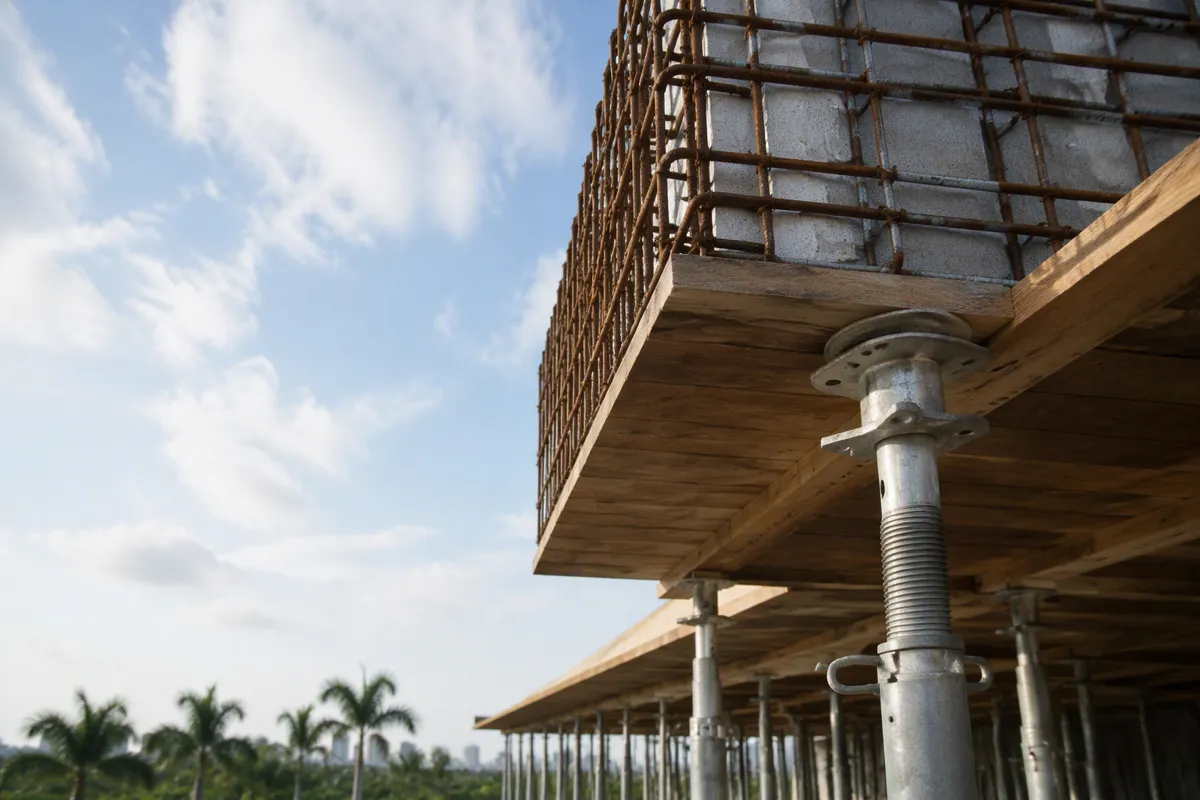
Shoring design in Florida refers to the engineering of temporary support systems that hold freshly poured elevated concrete slabs in place until the concrete reaches its required strength. For any multi-story construction project in the state, a licensed Professional Engineer must design these systems to meet the Florida Building Code (FBC 8th Edition) and ACI 347 standards.
- Licensed professional engineer in Florida
- Signed and sealed reports
What Is Shoring Design in Florida?
Failure to get proper shoring design in Florida has led to catastrophic collapses, the 2023 OSHA data shows elevated slab failures remain among the five leading causes of construction fatalities nationwide. This guide explains exactly what shoring design involves, why Florida’s codes demand licensed PE oversight, and how to avoid the most expensive mistakes on your next elevated slab project. If you are a developer, general contractor, or concrete subcontractor working anywhere from Miami-Dade to Palm Beach County, the information below directly applies to your permit and safety obligations.
Site Assessment and Load Analysis
Every shoring design in Florida starts with a site-specific load analysis. The engineer reviews the structural drawings, concrete mix design, pour sequence, and construction schedule to determine the exact loads each shore must carry. These loads include the weight of wet concrete (typically 150 pcf for normal-weight concrete), construction live loads (minimum 50 psf per ACI 347), wind loads, and any equipment loads from concrete pumps or buggies on the deck above. Florida’s coastal wind exposure adds a layer of complexity that inland states rarely face. For the Grand Beach Hotel project in Bay Harbor Islands, Paul Pineda worked with De Los Reyes Engineering and Brazil Construction to design a shoring system that accounted for sustained coastal wind speeds during a six-month pour schedule. The Alsina Formwork system specified for that project required custom bracing details because of the building’s proximity to Biscayne Bay. The output of this phase is a load table showing the required capacity at each shore location. This table drives every downstream decision, shore type, spacing, bracing, and the all-important reshoring sequence for lower floors. A site assessment that misses even one load condition can result in an under-designed system, which is why Florida law requires a licensed PE to seal these calculations.
01
Engineering Calculations and Sealed Drawings
With the load analysis complete, the engineer produces a sealed drawing package that specifies the shoring system in construction-ready detail. These drawings show the exact shore type (aluminum post shores, steel frames, or engineered towers from suppliers like PERI Systems or Aluma Systems), spacing on a grid, bracing layouts, and connection details. The Florida Building Code requires that every commercial and multi-story residential shoring system carry the seal of a Florida-licensed PE. The calculation package behind the drawings covers individual shore capacity, cumulative floor loading when reshoring, base plate bearing on the slab below, and lateral stability. For the Aventura Parksquare project, a large mixed-use development, Paul Pineda coordinated with Areda Construction and specified a combined PERI / Aluma system to handle varying floor heights and slab thicknesses across the complex. The sealed package included 14 separate pour-zone drawings and a reshoring schedule covering three floors simultaneously. Reshoring calculations deserve special attention. When a new slab is poured on Level 5, the shores transfer load down through Levels 4, 3, and potentially 2. If those lower slabs have not reached adequate strength, they can crack or fail. ACI 347R provides methods for calculating reshoring loads, and Paul’s drawings always include minimum concrete strength requirements (verified by cylinder break tests) before any reshoring operation begins. The sealed drawing package also includes a shore removal sequence. Removing shores in the wrong order can create point loads that exceed slab capacity. The drawings specify which shores to remove first, the minimum time before removal, and any temporary backshoring required during the stripping process.
02
Florida Building Code Compliance and Threshold Buildings
Florida shoring design must comply with the FBC (which adopts ACI 318 for concrete and references ACI 347 for formwork/shoring), OSHA 1926 Subpart Q for scaffolding and shoring safety, and local amendments from the Authority Having Jurisdiction (AHJ). In Miami-Dade County, for example, the building department requires a separate shoring permit with PE-sealed drawings before any elevated pour can proceed. Threshold buildings add another layer of regulatory oversight. Under Florida Statute 553.71, a threshold building is any structure that exceeds specific height, area, or occupancy thresholds, most buildings over three stories or 50 feet in height qualify. Threshold buildings require a Threshold Inspector (a specially licensed PE or architect registered with Florida DBPR) to observe all shoring installation and concrete pours. The Threshold Inspector verifies that field conditions match the sealed design before authorizing each pour. Paul Pineda holds both the PE license and Threshold Inspector license, which means Studio A Engineering can provide the shoring design and the threshold inspection under one firm. This eliminates the coordination delays that occur when the designer and inspector are from different companies. For the Transit Terminal Hub Roof at Dolphin Park in Miami, this dual capability allowed Stonehenge Construction and J&M Scaffolding to maintain an aggressive pour schedule without waiting for a separate inspection firm to mobilize.
03
Why Choose Studio A Engineering for Shoring Design in Florida?
Over 50 Elevated Slab Projects
Paul Pineda, PE has engineered shoring systems for over 50 elevated slab projects across South Florida, including SLS Lux Brickell (a 57-story high-rise in Miami), Grand Beach Hotel in Bay Harbor Islands, and Aventura Parksquare. As both a Florida Licensed Structural Professional Engineer and Threshold Inspector, Paul handles the full lifecycle of shoring, from initial design calculations through field verification, under a single sealed engineering package. Paul Pineda is a Registered Structural Engineer with over 20 years of experience in elevated slab shoring. He graduated from the National University of Engineering in Lima, Peru. His office is based in Doral, FL, providing same-day response to projects across Miami-Dade, Broward, and Palm Beach counties.
Demanding South Florida Projects
Studio A Engineering has designed shoring for some of the most demanding projects in South Florida. The SLS Lux Brickell tower in Miami required shoring calculations for 57 levels of elevated concrete slabs, one of the tallest residential buildings in the city. At the Chanel Store in Palm Beach, Paul provided threshold shoring design for a high-profile retail renovation with zero tolerance for construction defects. The Mandarin Oriental / Via Mizner project in Boca Raton demanded shoring design that accommodated luxury-grade architectural concrete with tight flatness tolerances.
Design and Inspection Under One Firm
Unlike firms that only design or only inspect, Studio A Engineering provides both services. This means Paul understands what the inspector will look for because he is the inspector. His shoring engineer Florida mistakes article documents the three most common errors he sees in the field, errors that originate in the design phase and could have been prevented with proper engineering.
Coordination with Suppliers and Contractors
Studio A also coordinates shoring design in Florida directly with formwork suppliers (Alsina, PERI, Aluma, and others) and scaffolding contractors like J&M Scaffolding and Micon Scaffolding. This coordination ensures the design matches the actual equipment that will be delivered to the site, preventing costly field modifications.
How Much Does Shoring Design Cost in Florida?
Professional fees for shoring design in Florida on a typical mid-rise project (5-15 stories) range from $5,000 to $25,000, depending on the number of elevated slabs, building footprint, and whether threshold inspection is included. For high-rise projects exceeding 20 stories, fees increase with the complexity of the reshoring analysis and the number of pour zones. In all cases, shoring design fees represent well under 1% of total construction cost, a fraction of the potential liability from an improperly designed system.
Key cost factors include:
- Number of floors with elevated slabs
- Span lengths and slab thicknesses
- Whether post-tensioning is involved
- Classification as a threshold building (which requires additional inspection visits)
- Local AHJ’s permit review requirements
Miami-Dade and Broward counties generally have more stringent review processes than smaller jurisdictions, which can affect turnaround time and cost.
Studio A Engineering provides fixed-fee proposals for every shoring design project. The proposal includes the sealed drawing package, calculation report, and coordination with the building department through permit approval. Threshold inspection services are quoted separately based on the anticipated number of site visits.
Get Expert Help with Shoring Design in Florida Today
Studio A Engineering provides shoring design and threshold inspection services throughout Florida. Paul Pineda, PE and his team deliver sealed shoring plans, reshoring calculations, and field inspection for projects of any scale.
Call us today: (305) 890-6333. También hablamos español. Contact us online to schedule a consultation or request a proposal.